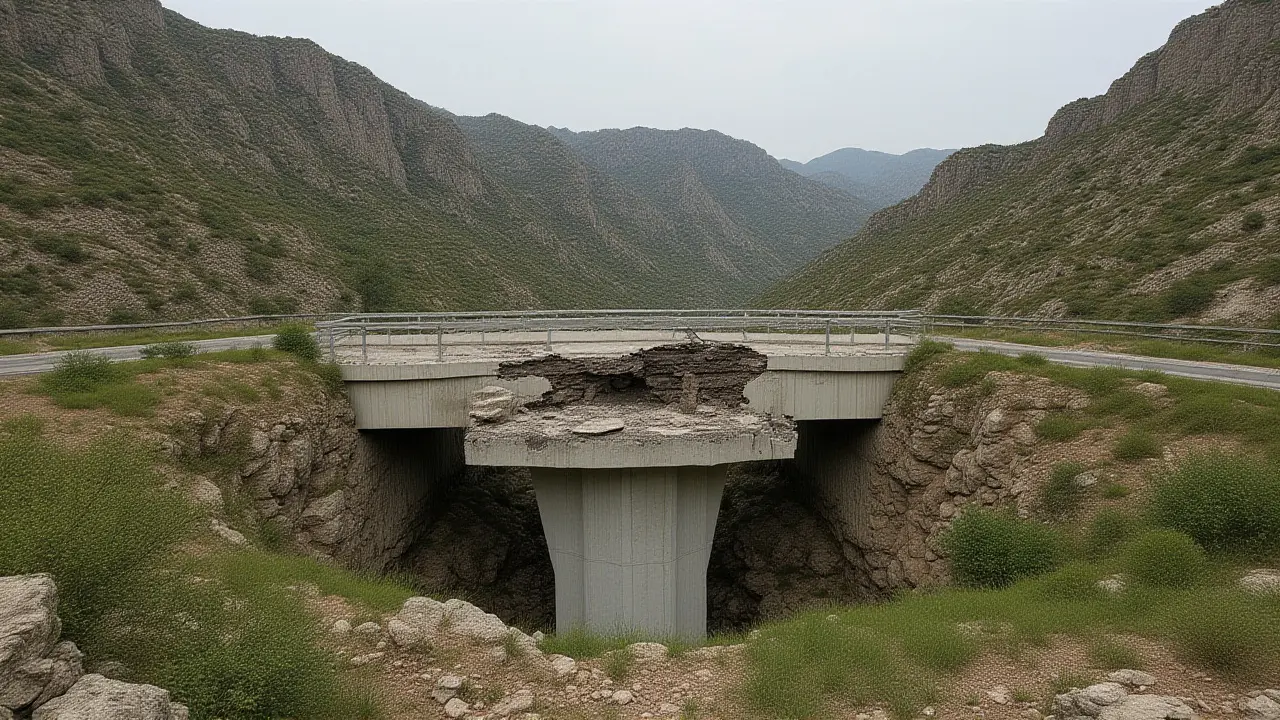
Israeli warplanes targeted and destroyed a critical bridge linking the towns of Sohmor and Mashghara in eastern Lebanon on Friday, April 3, 2026. The strike, which also hit a second nearby bridge, is part of a calculated military strategy to carve out a "security zone" by severing the primary supply lines used by Hezbollah to move reinforcements and heavy weaponry. This latest operation didn't just take out concrete and steel; it left two civilians dead and 15 others wounded in Sohmor, where missiles struck just as worshippers were leaving a mosque after Friday prayers.
Here's the thing: this isn't an isolated incident. It's a systematic dismantling of Lebanese infrastructure. By targeting the crossings of the Litani River, Israel is essentially trying to build a wall of rubble 30 kilometers north of its own border. Turns out, the military is following a very specific playbook—warn, then destroy—to ensure Hezbollah cannot shift its assets southward to resist the ongoing ground invasion.
- Date of Operation: April 3, 2026
- Primary Target: Bridges linking Sohmor and Mashghara over the Litani River
- Human Cost: 2 civilians killed, 15 wounded in Sohmor; 3 UN peacekeepers injured
- Strategic Goal: Severing military reinforcement corridors for Hezbollah
- Broader Context: Over 1,029 deaths and 1 million displaced since March 2, 2026
A Strategy of Isolation and Demolition
The logic behind these strikes is blunt. Israel Katz, the Defense Minister of Israel, made it clear that the orders were absolute: destroy every bridge over the Litani River that could be used for "terrorist activity." But the demolition isn't stopping at the bridges. Katz also revealed that Prime Minister Benjamin Netanyahu has instructed the military to speed up the tearing down of Lebanese homes in border villages.
This "scorched earth" approach in the contact villages is designed to thwart threats to Israeli communities, but it's creating a humanitarian vacuum. The military is essentially clearing a path, both physically and strategically, to ensure that any ground movement by Hezbollah is stalled by the lack of crossing points. It's a brutal game of logistics.
The Litani River: A Military Chokepoint
The Litani River has become the most contested geography in the region. By April 3, Israel had already successfully neutralized five other bridges over the waterway. The timeline shows a steady escalation: on March 23, 2026, the Qaquaiyah bridge was leveled, killing three people and injuring seven. That single strike was a signal that no crossing was off-limits.
Other strikes have followed in quick succession. In al-Shihabiya, residential areas were devastated, and in al-Hanniyeh, more lives were lost. Even small targets are being hit; in Majdal Selm, an airstrike targeted a single motorcycle, killing the rider. This level of precision—and persistence—suggests that Israel is not looking for a quick ceasefire, but a total reconfiguration of the border landscape.
UN Peacekeepers Caught in the Crossfire
While the fight is ostensibly between Israel and Hezbollah, the United Nations Interim Force in Lebanon (UNIFIL) is increasingly finding itself in the line of fire. On the same day the Sohmor bridge fell, a blast at a UN position wounded three peacekeepers. This was the third such incident in just a few days.
Oddly enough, the targeting seems to extend to the UN's "eyes" as well. In the coastal town of Naqoura, Israeli forces destroyed 17 surveillance cameras linked to UNIFIL's main headquarters within a 24-hour window. UNIFIL spokeswoman Kandice Ardiel reported that soldiers have been conducting large-scale demolitions in Naqoura since the start of that week, effectively blinding the international community to the exact movements on the ground.
The Road to Escalation: March 2 and Beyond
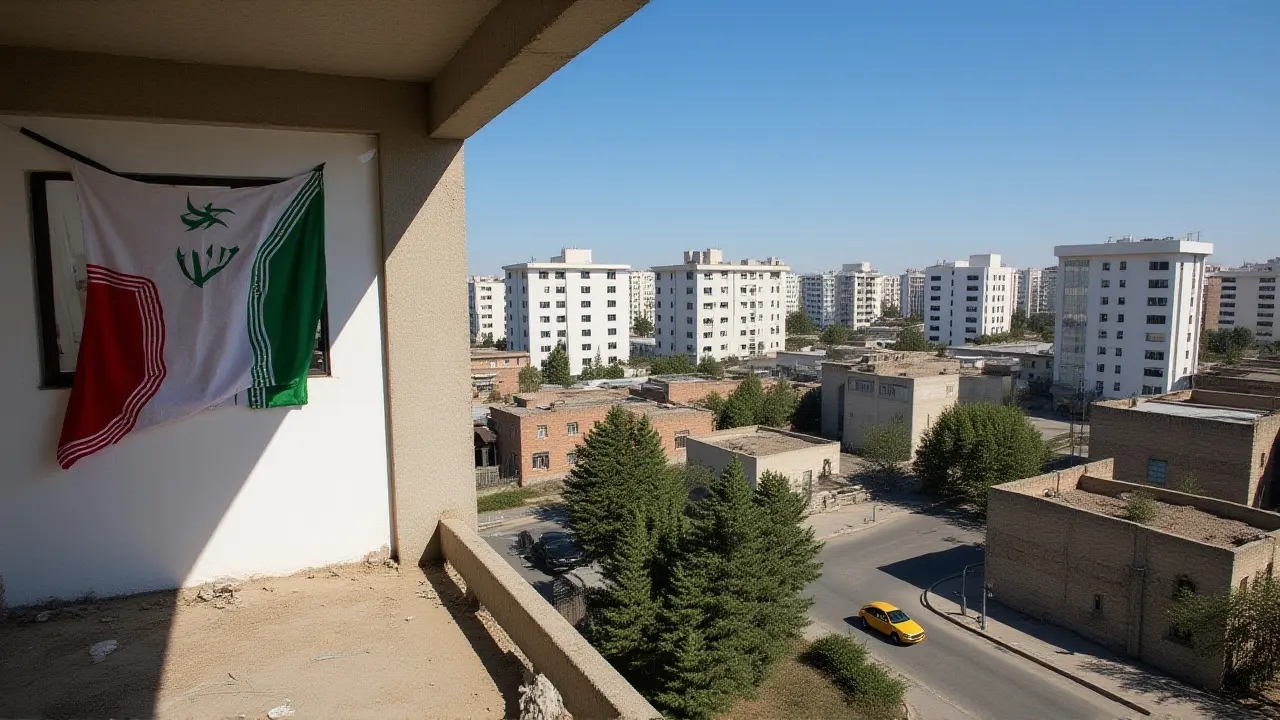
To understand why this is happening, we have to look back to the start of the current conflict Lebanon-Israel Border . The spark was a US-Israeli strike that killed Iran's supreme leader, Ayatollah Ali Khamenei. Hezbollah, acting as Tehran's primary proxy, responded on March 2 with a barrage of rockets into Israel. What followed was a massive Israeli response: an aerial campaign followed by a ground invasion in southern Lebanon.
The human toll is staggering. Within just three weeks of the initial March 2 escalation, the death toll hit 1,029, and more than one million Lebanese citizens were forced to flee their homes. It's a displacement crisis of a scale that dwarfs previous skirmishes in the region.
What Lies Ahead for Southern Lebanon
The Israeli military isn't hinting at a wind-down. On the contrary, Brigadier General Effie Defrin recently stated that the ground operation is actually expanding. According to military officials, the operation against Hezbollah has "only begun," and they are currently preparing to advance targeted ground strikes according to an organized, long-term plan.
The ripple effects of destroying the Litani bridges will be felt long after the missiles stop falling. With the main routes across the waterway gone, the local economy is paralyzed, and the delivery of humanitarian aid becomes a logistical nightmare. The "security control" Israel seeks may come at the cost of a permanent regional instability.
Frequently Asked Questions
Why is Israel specifically targeting bridges over the Litani River?
The Litani River serves as a natural geographic barrier. By destroying the bridges, the Israeli military aims to prevent Hezbollah from transporting reinforcements, weapons, and military equipment from northern and eastern Lebanon toward the southern border, effectively isolating Hezbollah fighters already present in the south.
What was the immediate cause of the conflict that began on March 2, 2026?
The conflict was triggered after Hezbollah launched rockets into Israel to avenge a joint US-Israeli operation that resulted in the death of Iran's supreme leader, Ayatollah Ali Khamenei. This sparked a cycle of massive aerial strikes and a subsequent Israeli ground invasion of southern Lebanon.
How has the UN been affected by the fighting?
UNIFIL peacekeepers have been caught in the crossfire, with multiple soldiers wounded in recent blasts. Additionally, Israel has targeted UN infrastructure, including the destruction of 17 surveillance cameras at the UN headquarters in Naqoura and the demolition of areas under UN observation.
What is the current humanitarian status in Lebanon?
The situation is dire. As of early April 2026, over 1,029 people have been killed in the three weeks of fighting. Moreover, more than one million people have been displaced from their homes, primarily in the south, creating a massive internal refugee crisis.
Gary Clement
April 7, 2026 AT 03:51completely standard military doctrine to target bridges and choke points during an invasion to disrupt logistics and reinforcement flows it makes total sense from a tactical standpoint though the collateral damage is obviously the tragedy here
nikolai kingsley
April 8, 2026 AT 22:57absolutely disgusting that thye are targeting mosques and civillians just to make a point ths is a war crime plain and simple no amount of strategic goals justifies killing people praying 🙄
Antony Bachtiar
April 9, 2026 AT 19:51oh please if you dont destroy the bridges the hezbollah guys just keep coming and the war lasts ten times longer. its basic math. ppl acting like this is some crazy thing when its just how war works. stop crying over concrete
Dianna Knight
April 9, 2026 AT 21:25My heart just breaks for all those families displaced and the trauma they're facing right now 🥺 It's such a high-stress environment and we really need to focus on the psychosocial support systems for these refugees! The sheer volume of IDPs is overwhelming the local infrastructure and the bandwidth for humanitarian aid is just not there. Sending so much love and light to everyone caught in the crossfire ✨💖
Aaron X
April 9, 2026 AT 23:57The systematic erasure of physical infrastructure represents a transition from tactical engagement to a broader ontological shift in the regional landscape. By utilizing a scorched earth policy, the state is not merely managing a border but is attempting to implement a spatial hegemony that precludes the possibility of insurgent mobility. This is a classic example of the dialectic between security and sovereignty where the former completely subsumes the latter, leading to a state of exception that justifies the dismantling of the domestic sphere. The destruction of the Litani crossings functions as a semiotic signal of total dominance, effectively rewriting the geography of the Levant to fit a specific security paradigm. We are witnessing the physical manifestation of a geopolitical axiom where the cost of stability is the total obliteration of the opposing side's logistical capacity. The result is a fragmented territory where the local populace becomes an incidental variable in a larger strategic calculation. The erosion of the sovereign border is replaced by a militarized zone of exclusion. This is a profound shift in how modern warfare manages the transition from kinetic action to territorial control. The humanitarian vacuum is an inevitable byproduct of this systemic reconfiguration. It's an exercise in architectural violence aimed at permanently altering the social and physical fabric of the region. The precision of the strikes reflects a desire for a controlled, surgical removal of any potential for resistance. Ultimately, this is a play for absolute control over the movement of people and materiel.
Mel Alm
April 10, 2026 AT 21:09those poor peacekeepers just trying to do there jobs and getting hit by blasts. its just wrong
Beth Elwood
April 12, 2026 AT 10:45Targeting UN surveillance cameras is a bold move to ensure no one sees what's actually happening on the ground. It's basically a blackout strategy 🚫📸 This makes any attempt at international oversight nearly impossible. 🚩
Josh Raine
April 13, 2026 AT 10:01Why is everyone just accepting this as 'tactics' while people are dying at mosques?! 😡 The cognitive dissonance here is insane. We're watching a humanitarian catastrophe in real-time and people are talking about 'logistics' like it's a game of SimCity. This is absolute madness! 🤯
Mason Interactive
April 15, 2026 AT 04:29It's wild how the Litani River is basically the center of the whole conflict right now. Once those bridges go, the whole area is basically cut off from the rest of the country.
Alex Green international
April 17, 2026 AT 01:16It is truly regrettable that innocent civilians have perished in these circumstances